
Last week there was a day when a decent weather forecast and an empty diary coincided, an opportunity with a good friend for a trip to County Donegal, to visit some familiar places and explore some new ones.
It seemed ambitious to cover both sunrise and sunset on the same day, for it would have meant a 5am start to get to the location for 7.30. So we decided to give sunrise a miss. That’s rarely a good decision in Ireland, where the proverbial four seasons can happen on one day. And even if they don’t, a beautiful beginning is often the harbinger of a bleak ending. And so it proved.
On the plus side, at this time of the year in Ireland (early autumn) the light during the day is rarely harsh and the lower angle of the sun, when it appears, is wonderful for showcasing the landscape.
Landscape photography was not the only thing on our minds and we made our first stop at the wildfowl reserve at Inch to check on the annual migration of the whooper swans.
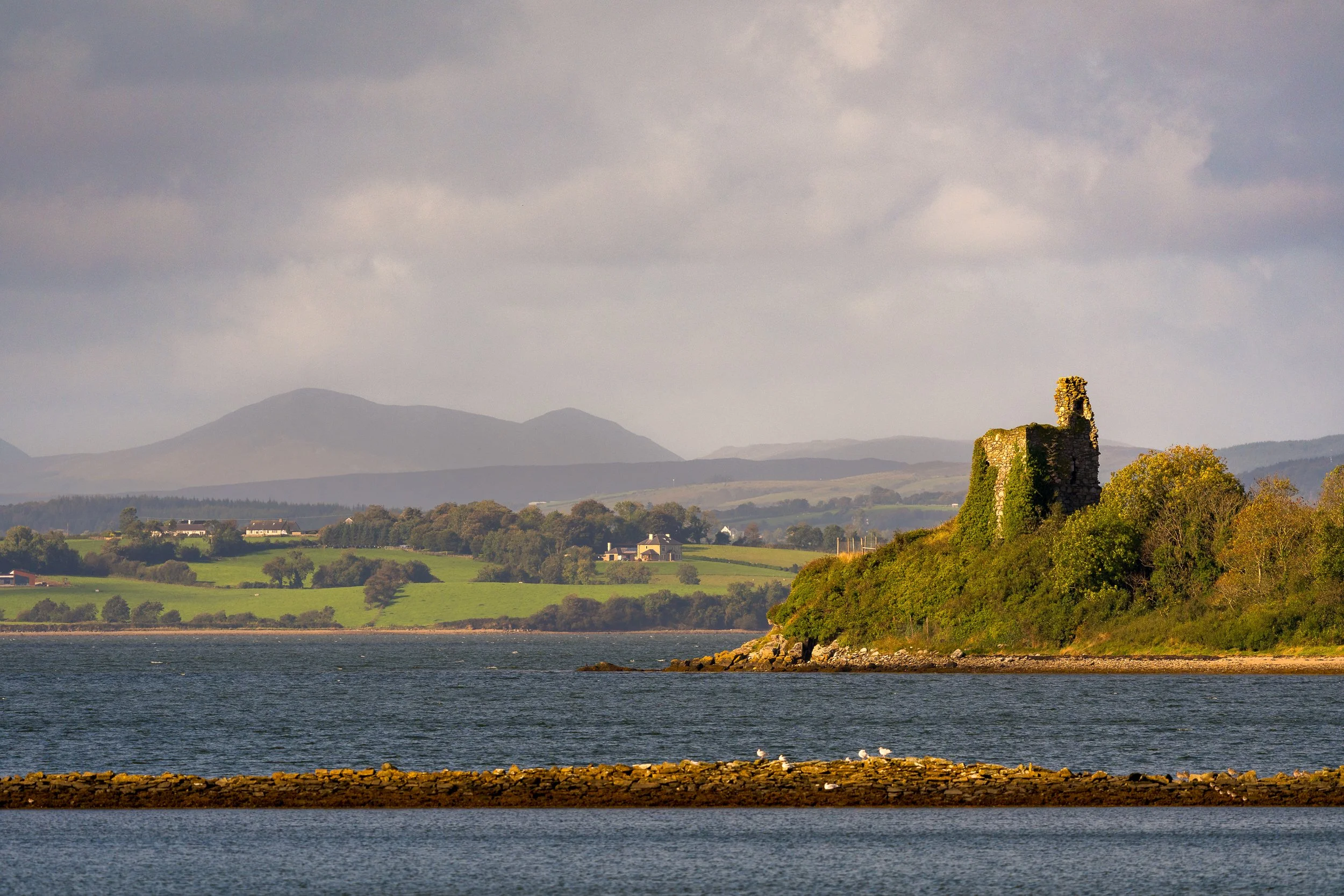
Inch Wildfowl Reserve
There were mute swans a-plenty and we could hear noisy geese (greylags) but unlike our previous visit, the sky was not filled with squadrons of whoopers coming in to land from the frozen north. It was too early in the season. We only spotted one small group, hopefully an advance party with many more to come in the next few weeks.
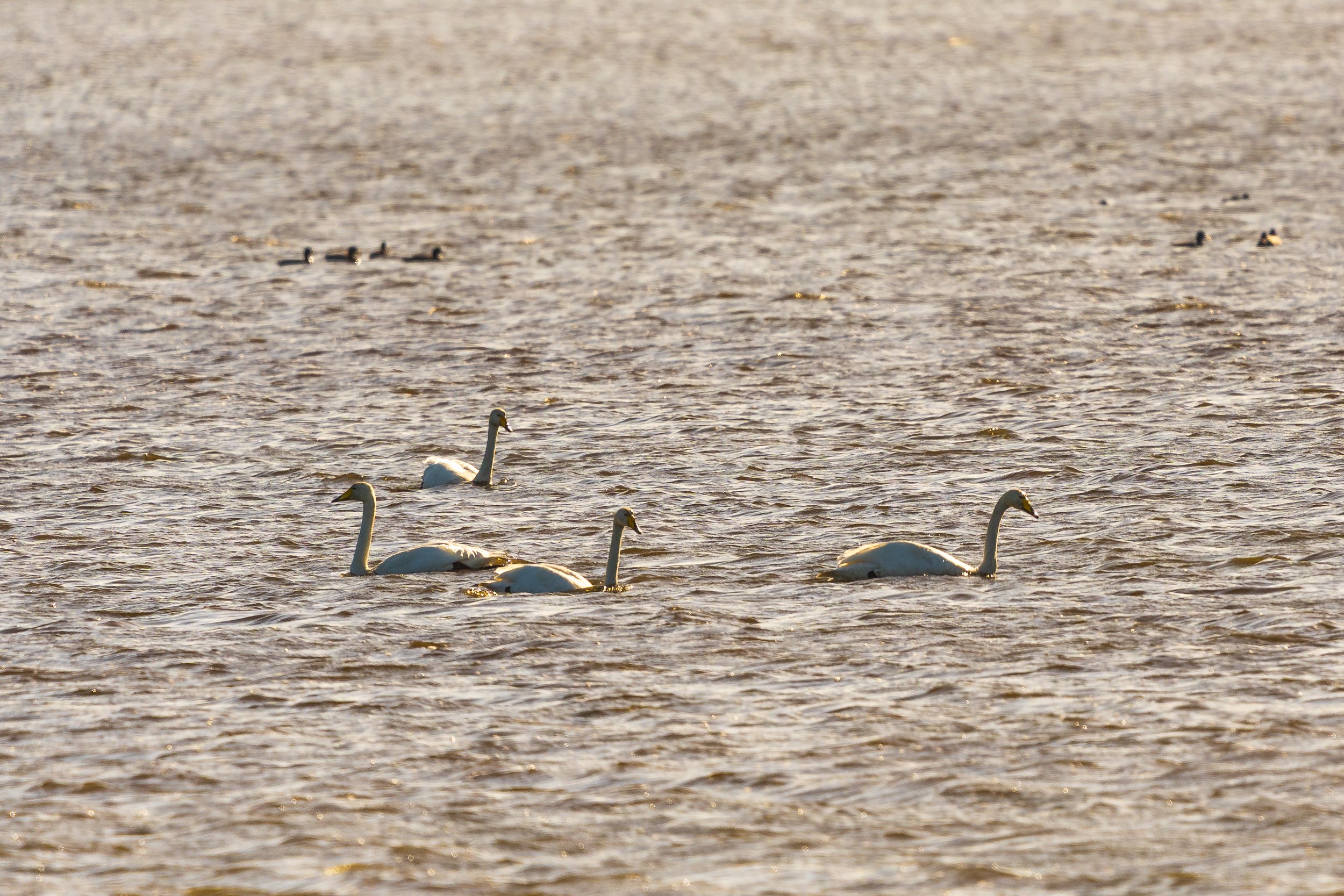
Whoopers at Inch. Photographing into the light was tricky but you can just make out their distinctive yellow and black bills.
The birds generally kept their distance - which is easy to do in the vast spaces at Inch - all except a handsome robin. So after an enjoyable walk in the sun, and a pit stop at the Spill the Beans cafe (excellent food), we headed on for the main business of the day.
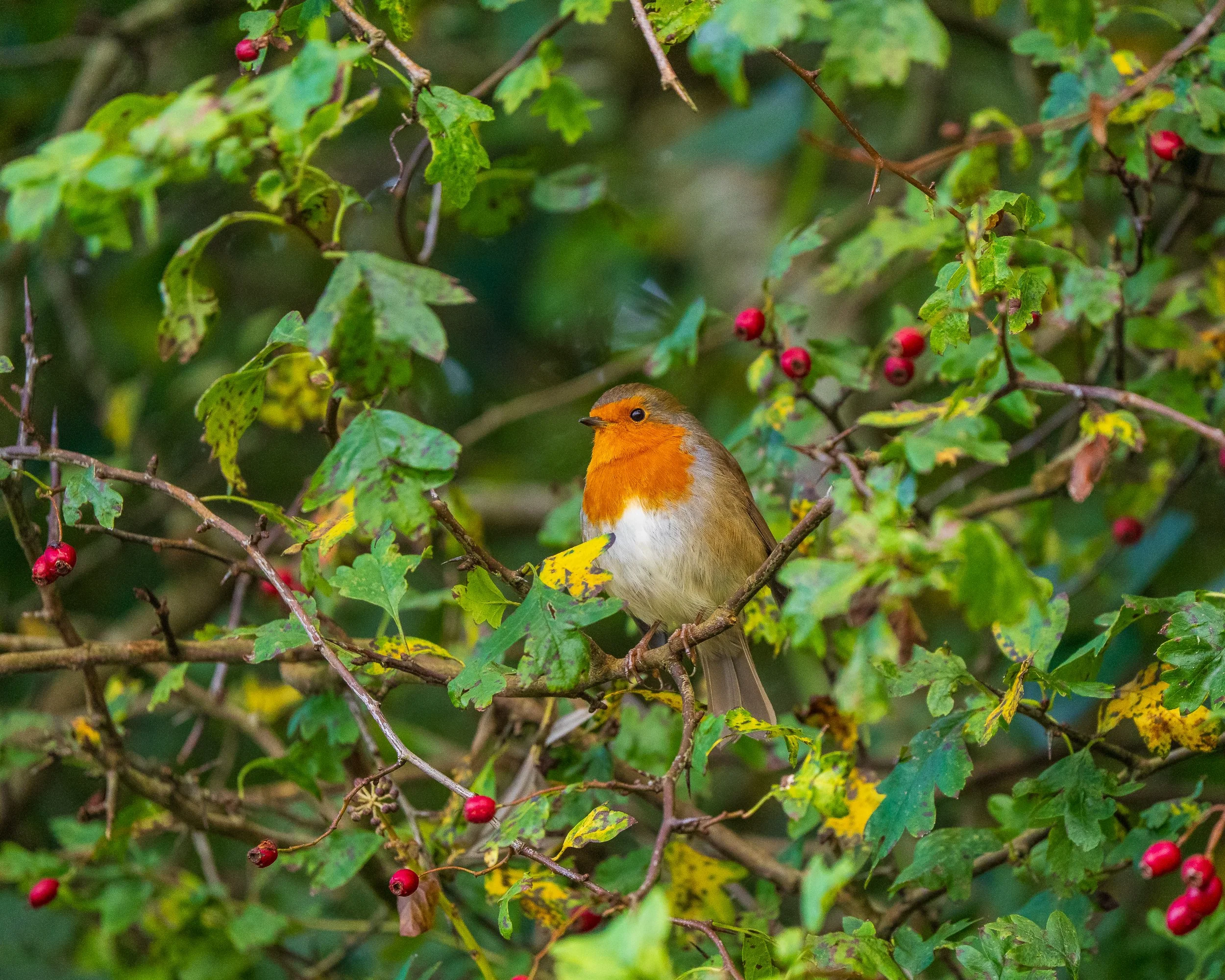
European robin at Inch
While doing some research on Donegal locations I had come across what seemed like a very promising vantage point for capturing the ruggedness and drama of this beautiful county. It is known as the Devil’s Backbone.
I knew the area, near Portsalon, since we had caravanned there over thirty years ago when the children were small. But it involved finding a single track cul-de-sac somewhere in the hills and then a hike higher up into a gap where I knew there was a lake. Thankfully Google Maps didn’t let us down and we found the narrow lane that led us high above a small village until it ended abruptly at a barbed wire fence. At this point the lane widened enough to turn and park the car. What struck us immediately was the silence, disturbed only by a raven’s deep croak and a flutter of wings by a startled wheatear.
The weather, which had been glorious up to this point, decided to adopt a mood to suit the rough terrain. We were spared rain, but the sky became overcast. Halfway up the stony and damp track it was very tempting to turn back. But having made the effort to get so far, we persuaded ourselves that we might as well find out what was over the ridge line. A good decision.
What wasn’t a good decision was the amount of photographic gear I brought with me. Just in case…. My main camera, a zoom lens, a tripod and a drone. For as it turned out, only the drone provided the needed point of view.
I never tire of watching the unfolding vista on the monitor of an otherwise hidden landscape, as the drone rises in the sky. A reminder that sometimes to understand a small scene or issue facing us we need on occasions to get above it, to find a different perspective, so that we are not tied to one limited and usually deeply self-referential location. Life looks different from above.
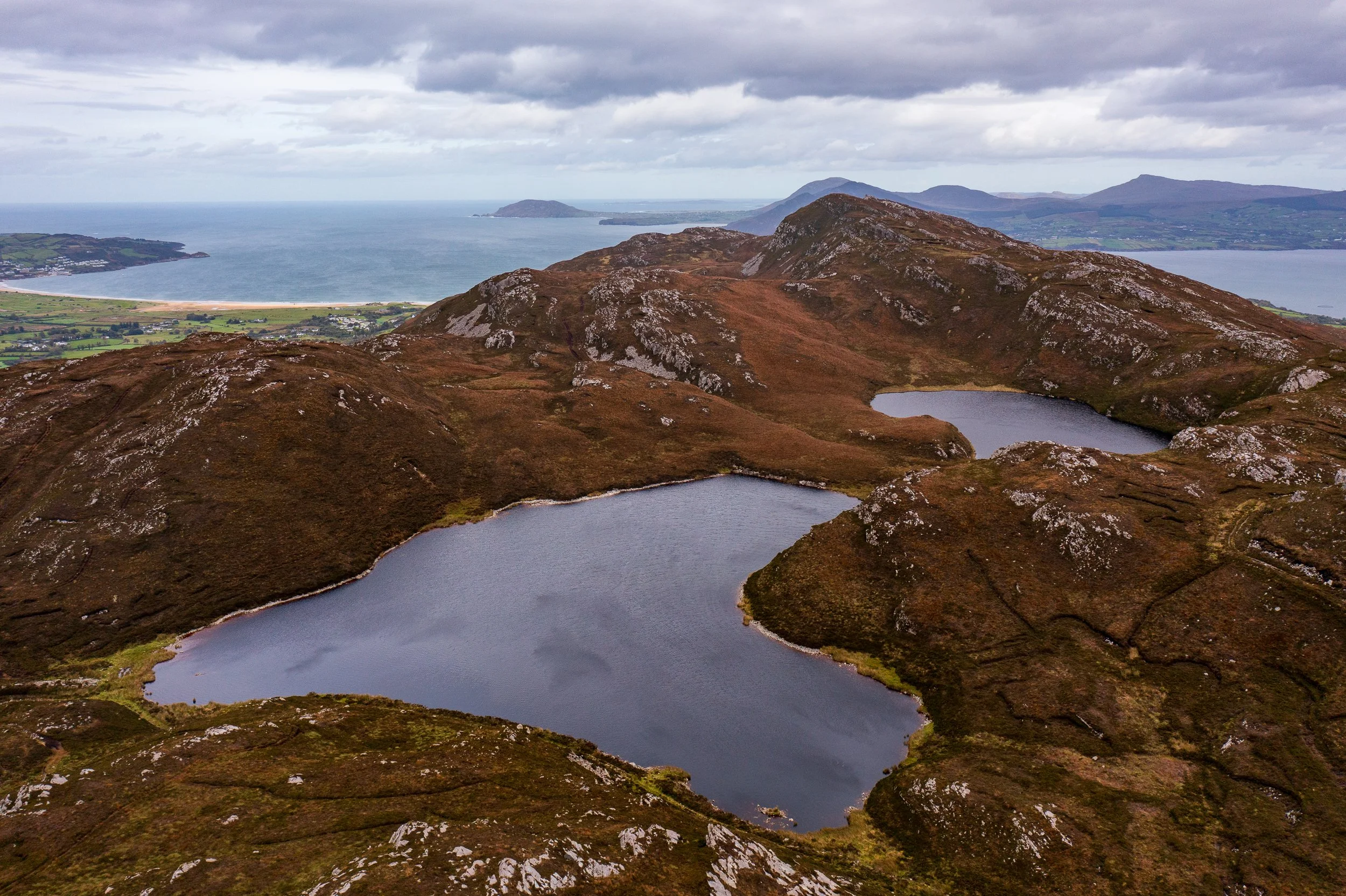
The Devil’s Backbone
One of the things I most enjoy about journeys through Donegal is the opportunity for serendipity. It creates an expectation that just around the next of a thousand corners there will be something worth stopping for. And so it was on our way back down to the coast that two fine horses appeared in a field that was suddenly turned golden in bright sunshine.
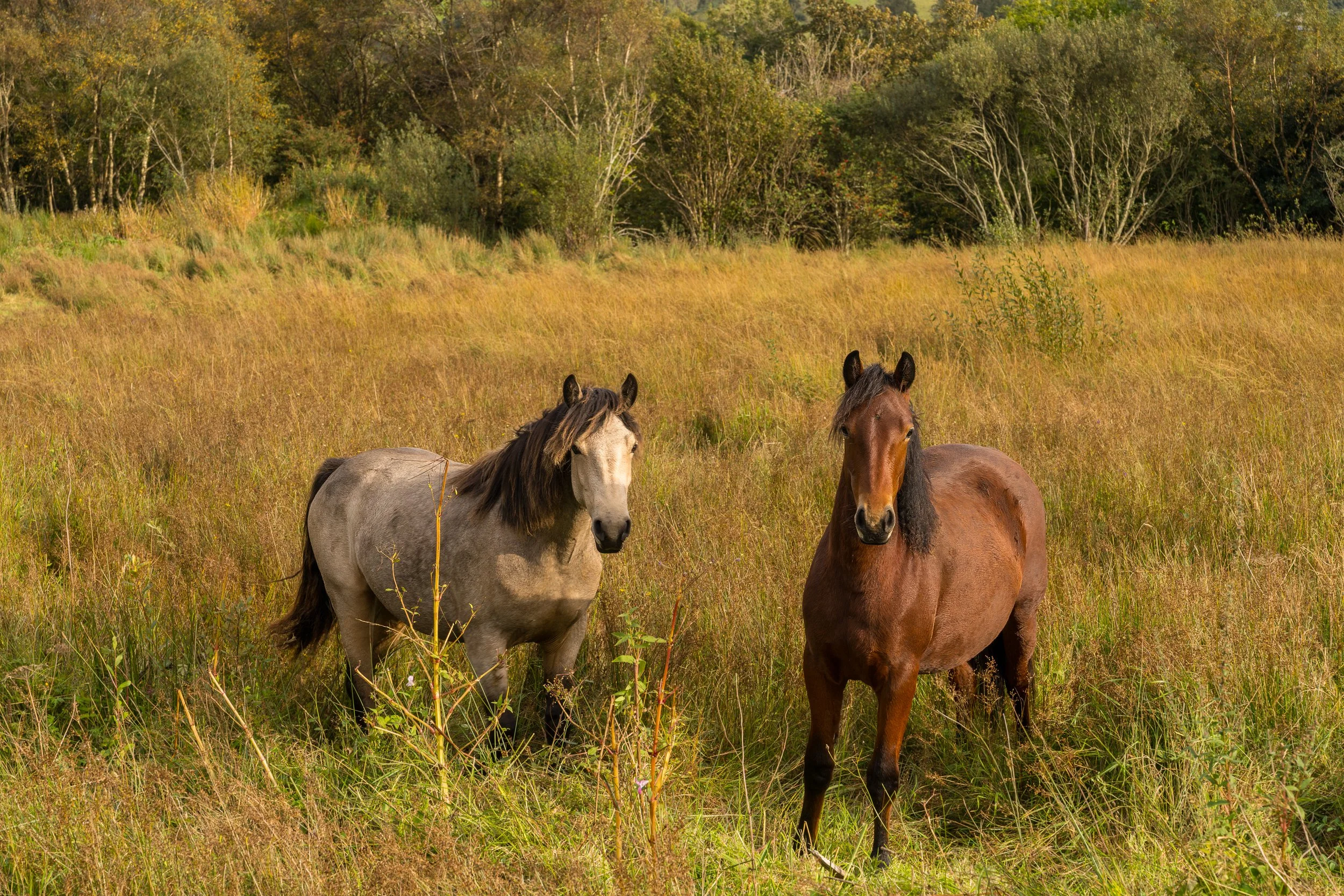
Donegal horses.
From here we followed instinct rather than Google Maps - be warned, internet reception is iffy at best in large areas of Donegal - and found ourselves on the eastern coast of the Fanad Peninsula, stopping to take in the view across Lough Swilly of Dunree Head on the west coast of Inishowen. And then on to the viewpoint overlooking the magnificent Ballymastocker beach, where once again we benefitted from the sun lighting up the central part of the scene.
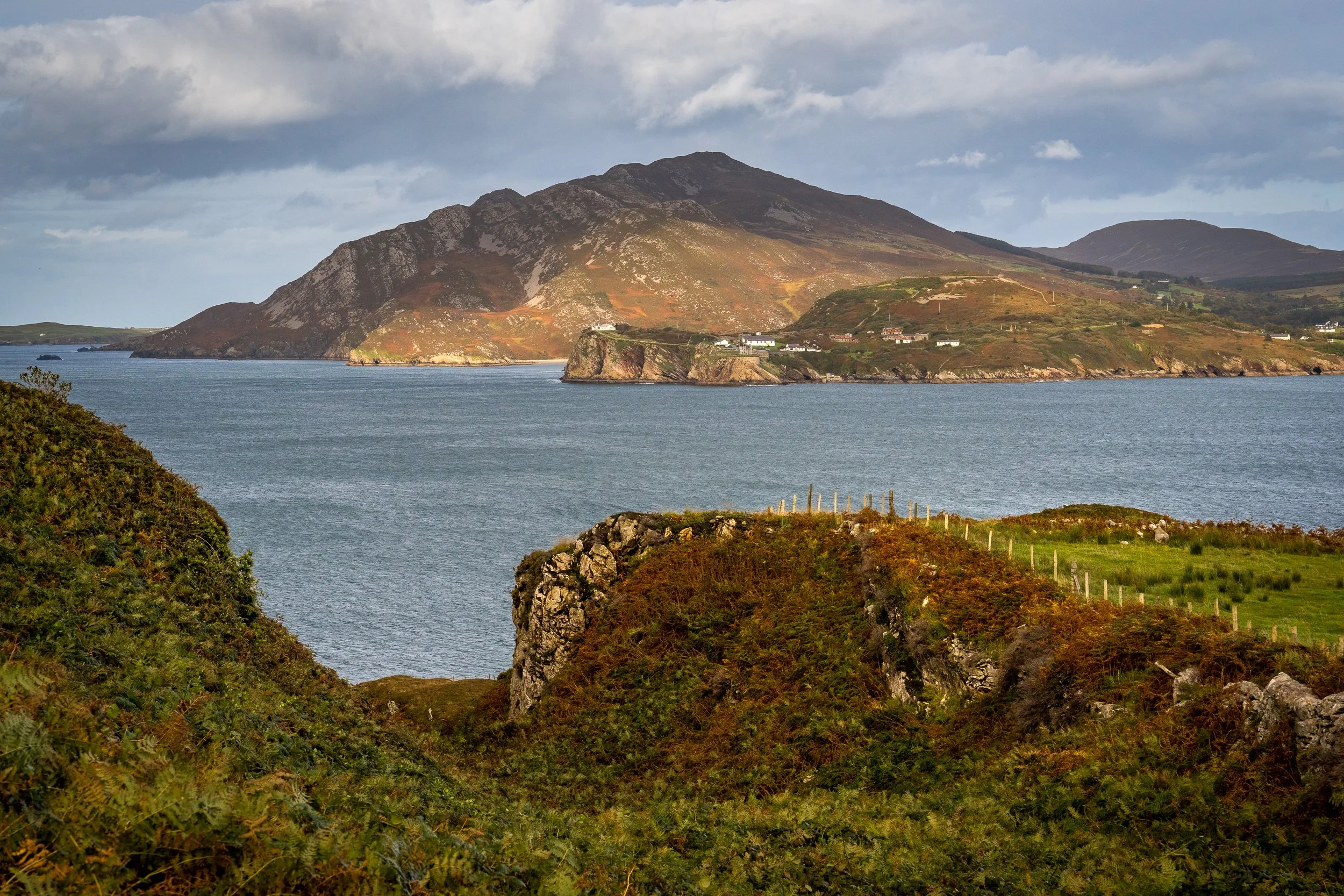
Dunree Head
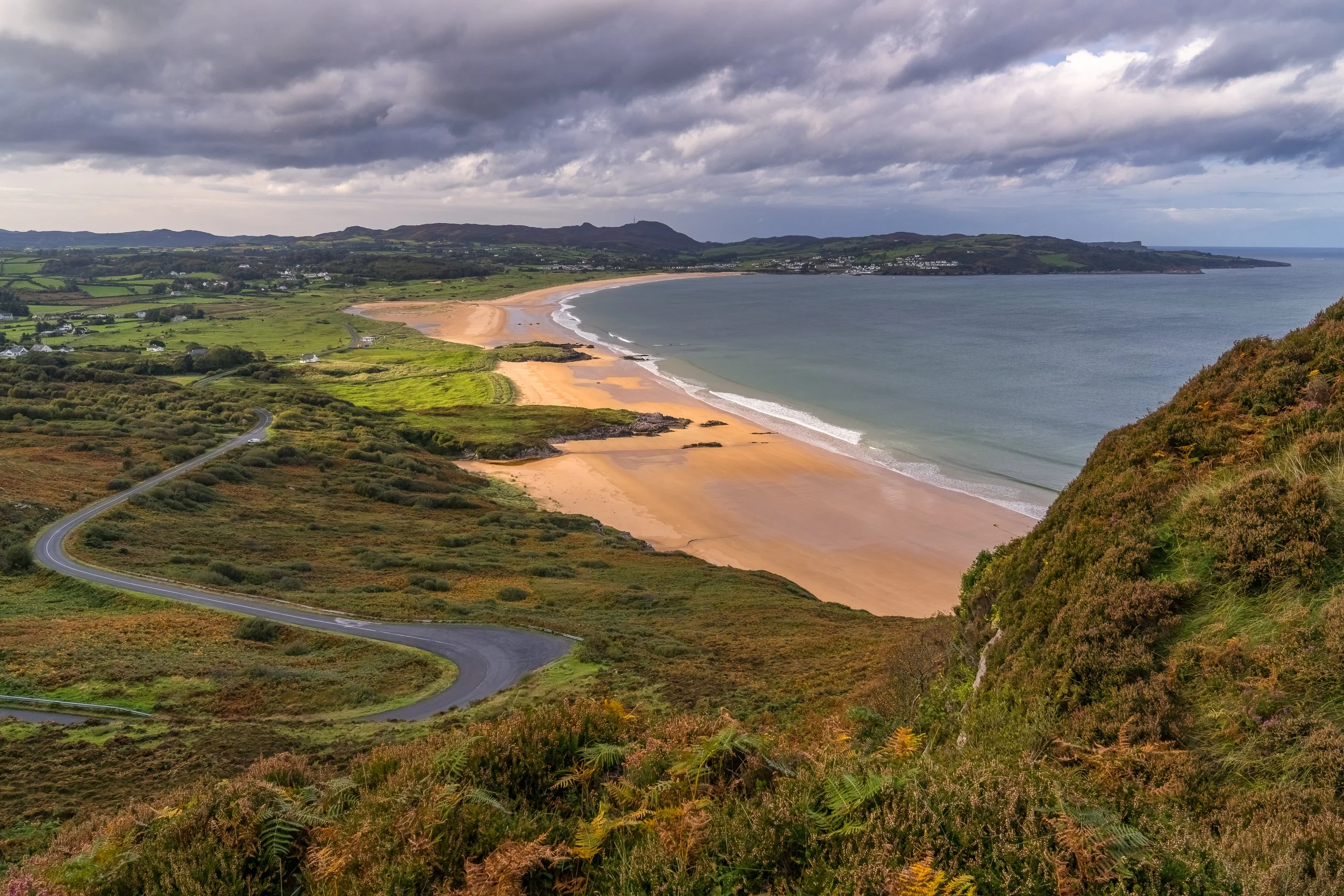
Ballymastocker Beach, with the coastal village of Portsalon in the distance.
Our main goal was the lighthouse on Fanad Head. The weather had once again closed in but at least there was the prospect of sandwiches at our destination and even a cinnamon swirl. There’s an excellent car park at Fanad Head Lighthouse, with a cafe, toilets and a wonderful view of the sea. Although the cafe had just closed, the picnic was welcome. And then, with a picnic still to be eaten, the sun burst through.
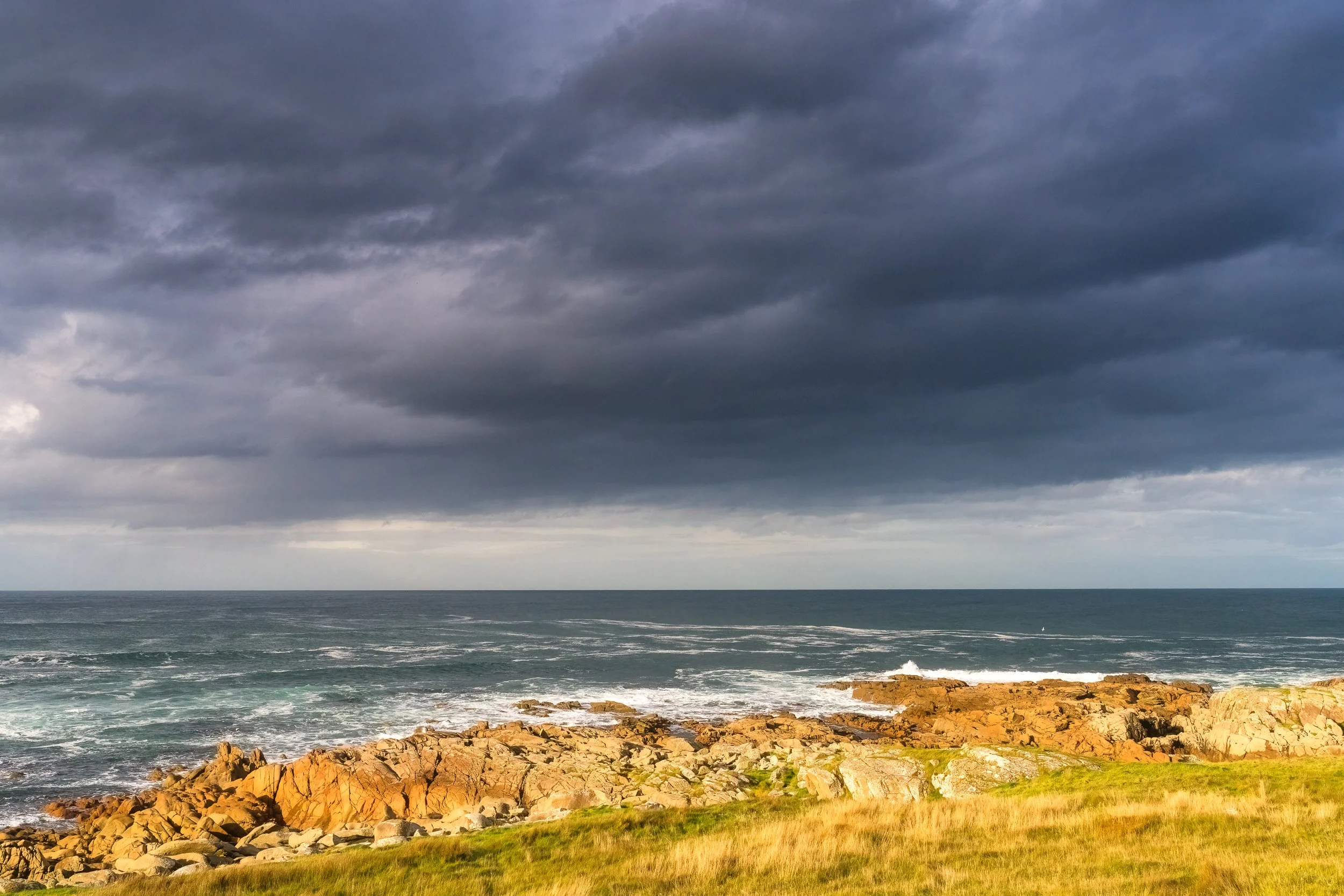
The sun bursts through.
I grabbed my gear and ran the short distance to the lighthouse. (Not the best idea at my age.). Thankfully the light stayed with us for perhaps 20 minutes. It was clear from the sky that this was the only opportunity we would have.
It is often like that in landscape photography: long periods of nothing happening and then the rush. It would have been wiser to forget completely about eating and get into position before the light came out, but that’s a lesson I have found hard to remember.
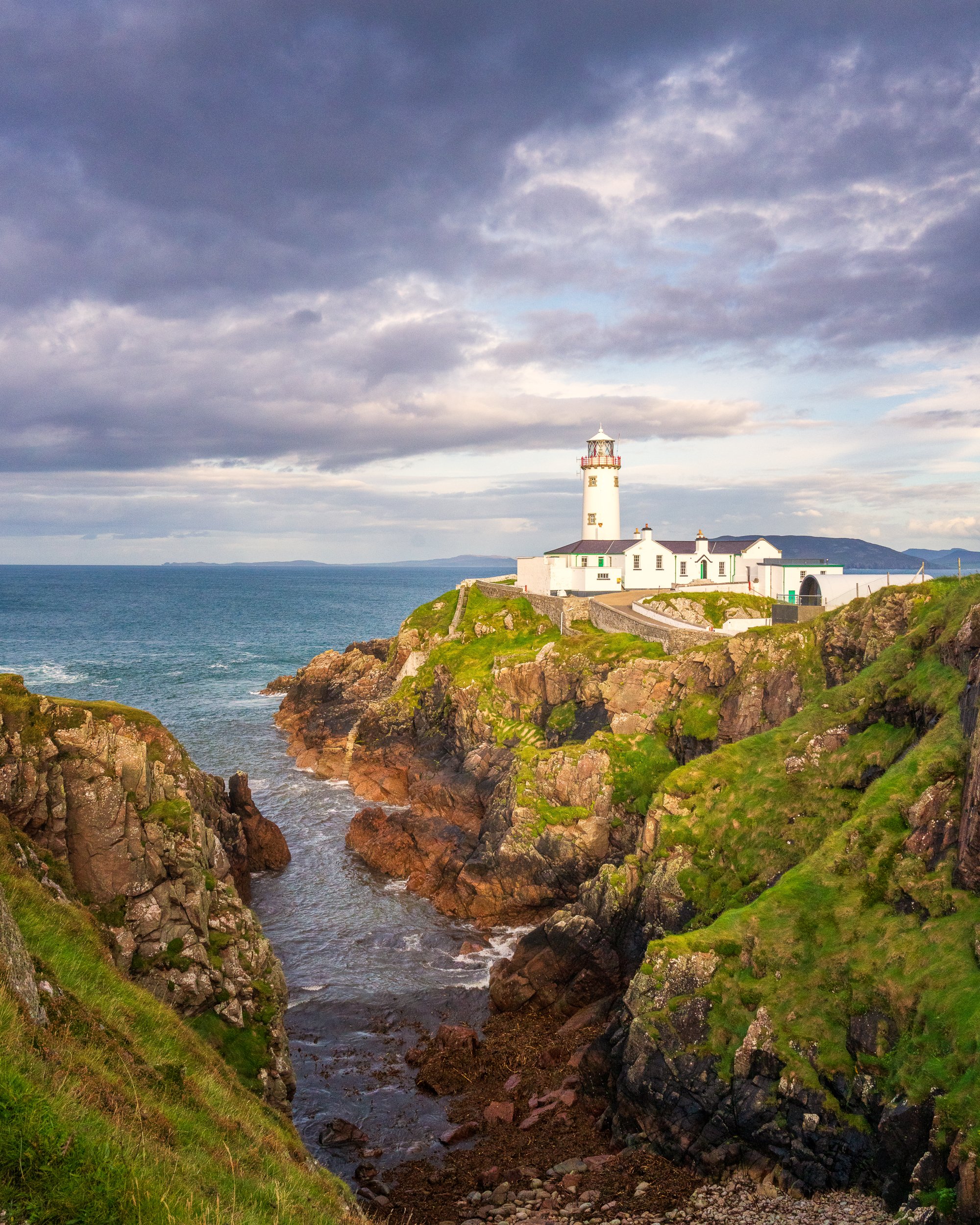
The lighthouse at Fanad Head
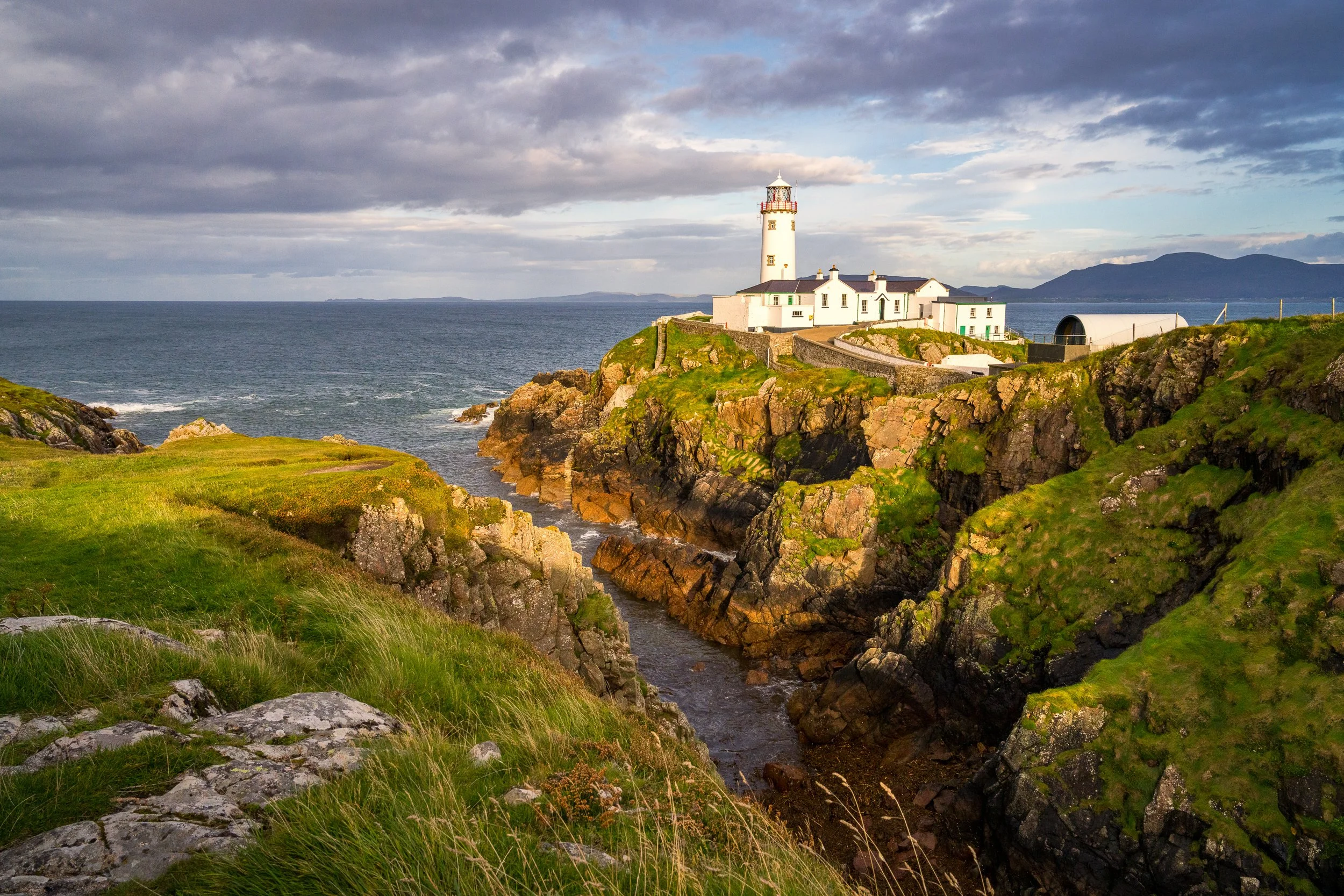
After taking these first two photos handheld, in too great a hurry fearing that the light would disappear, there was time to walk down to the rocks opposite the lighthouse for different perspectives.
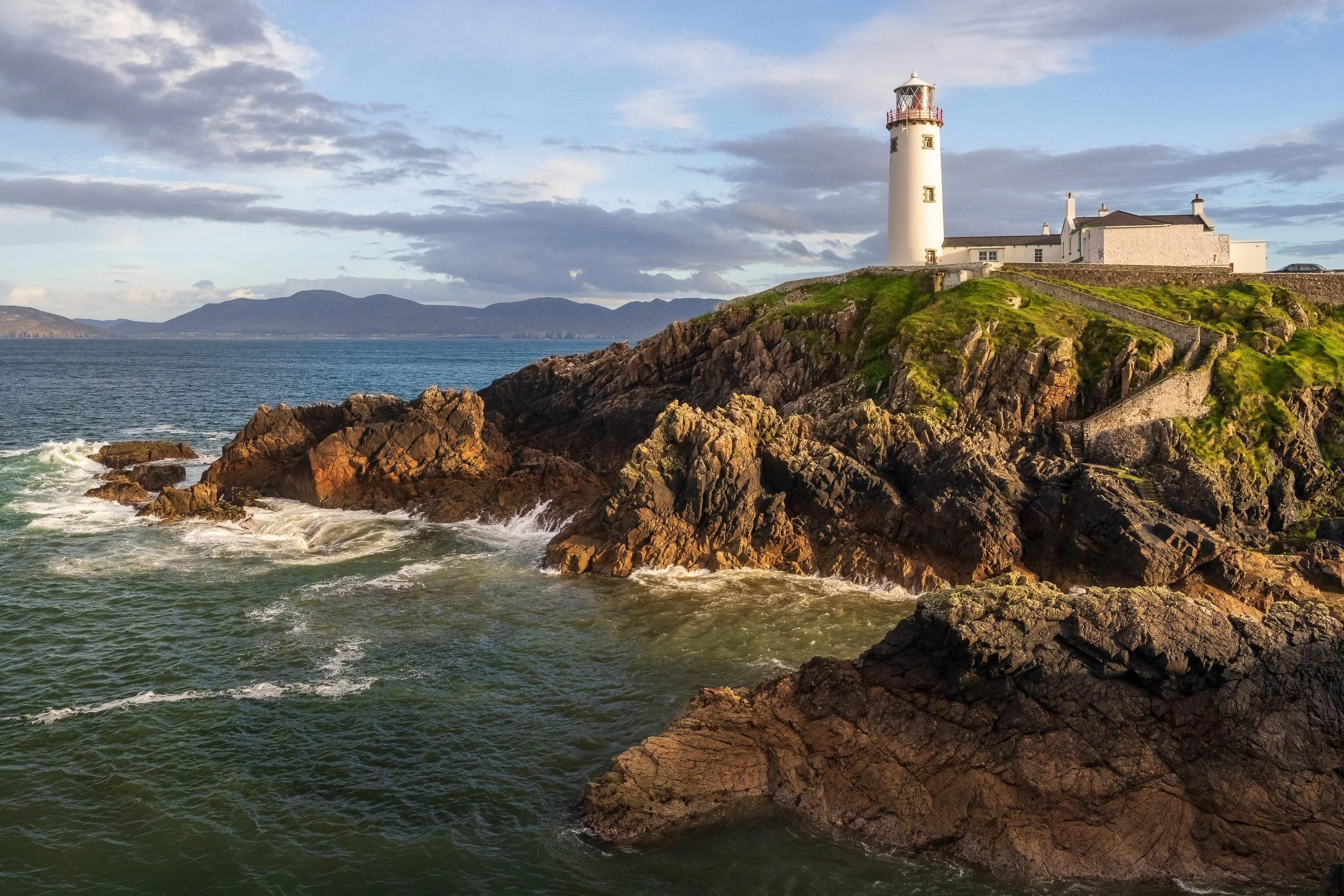
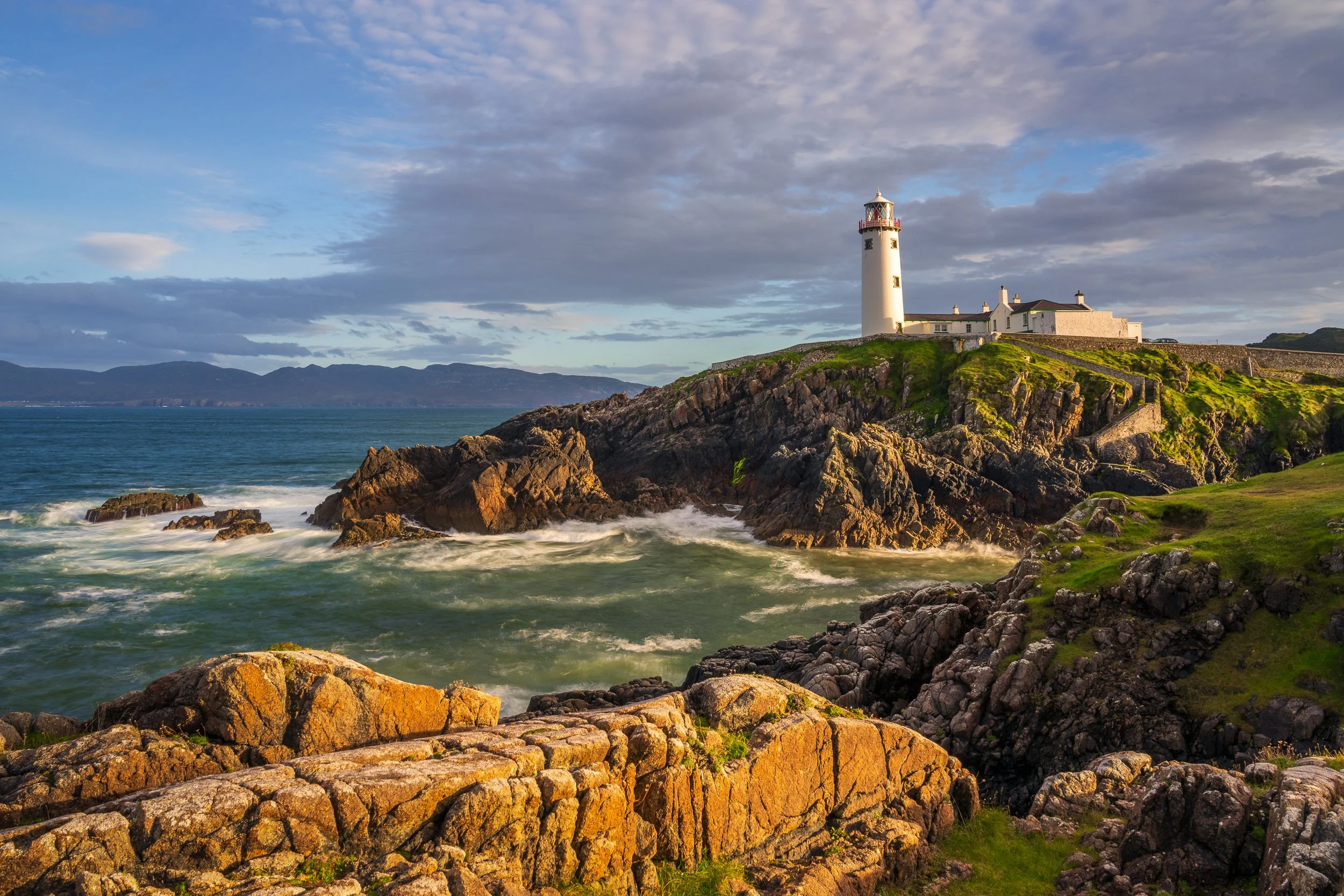
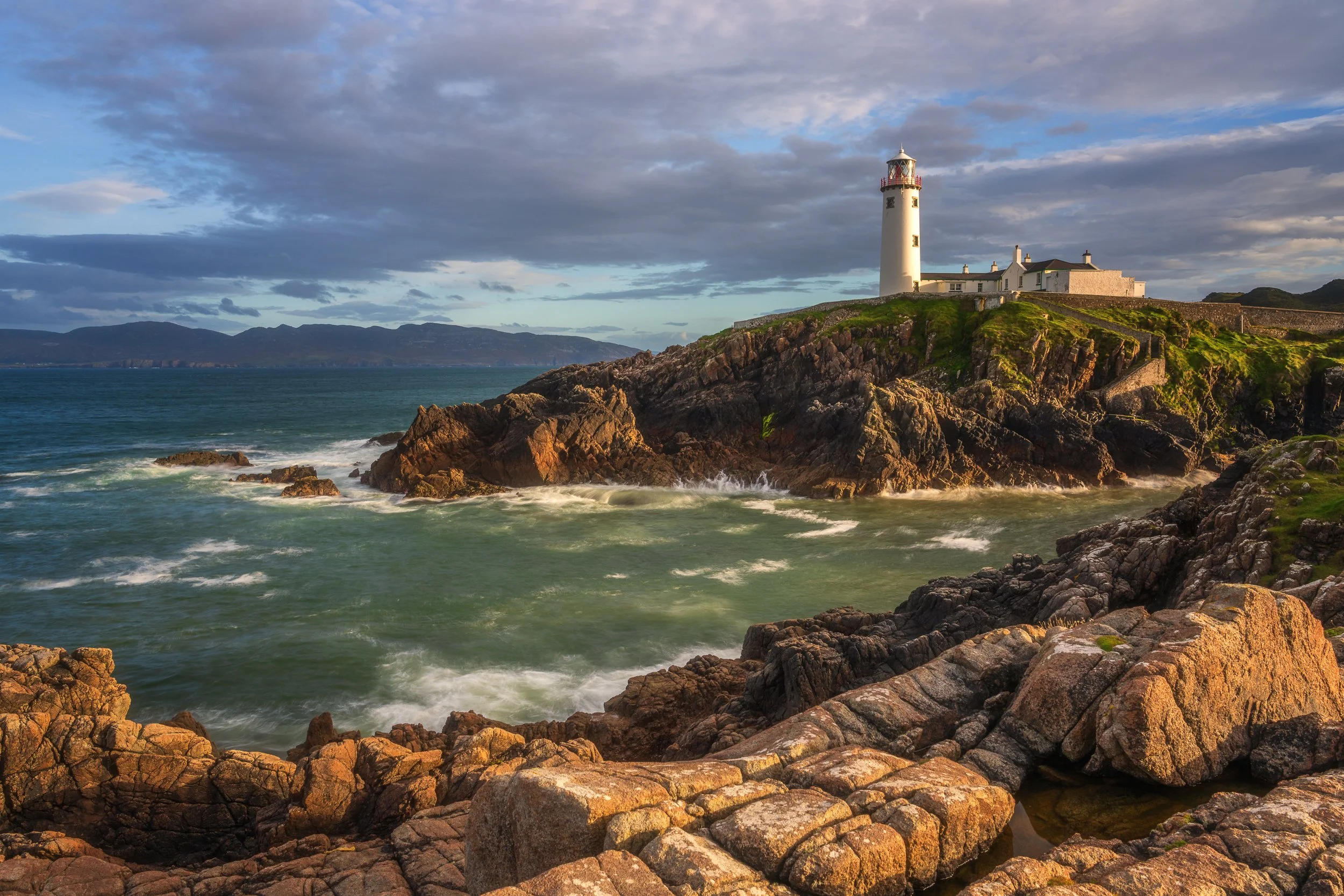
The Fanad Head lighthouse is arguably the most photogenic in Ireland. I first visited it eleven years ago in June, when by staying overnight in a local B&B I managed to photograph it both at sunrise and at sunset. It was 4.30 in the afternoon, two and a half hours before sunset, when I made the photos above, just in time before the shadow of the headland behind me obscured the foreground rocks from the sun. Had there been more time I might have ventured lower and further to the left to work a different composition, but the sun then disappeared behind a bank of clouds, and with it the chance of colour in the clouds at the end of the day.
Thrilled with the conditions we had experienced we decided to pay a visit to the Great Pollet Arch a short distance away before heading home. The last time I visited this sea arch I did so with difficulty as a landowner had attempted to block access. However in the intervening years the dispute had been sorted, for we found a new car park together with a fenced walkway that led right down to the small stony beach with close views of one of Ireland’s finest sea arches. It is a considerable walk and the path slopes quite sharply down, so be prepared if you plan to visit. It is worth it. Even in the overcast conditions the Great Pollet Sea Arch made a fitting end to our Fanad peninsula adventure. And on the walk back up to the car I noticed a number of thoughtfully placed benches in case a rest is required. I’m happy to report that I didn’t need them this time!
I’ve always been attracted to sea arches. I think it is because we don’t just look at them, we look through them. And when they are out of reach like this they are especially tantalising and mysterious, portals to another world. And in my imagination I am back at the Wardrobe door, wondering what lies beyond, wondering if this might be the way to another Narnia?
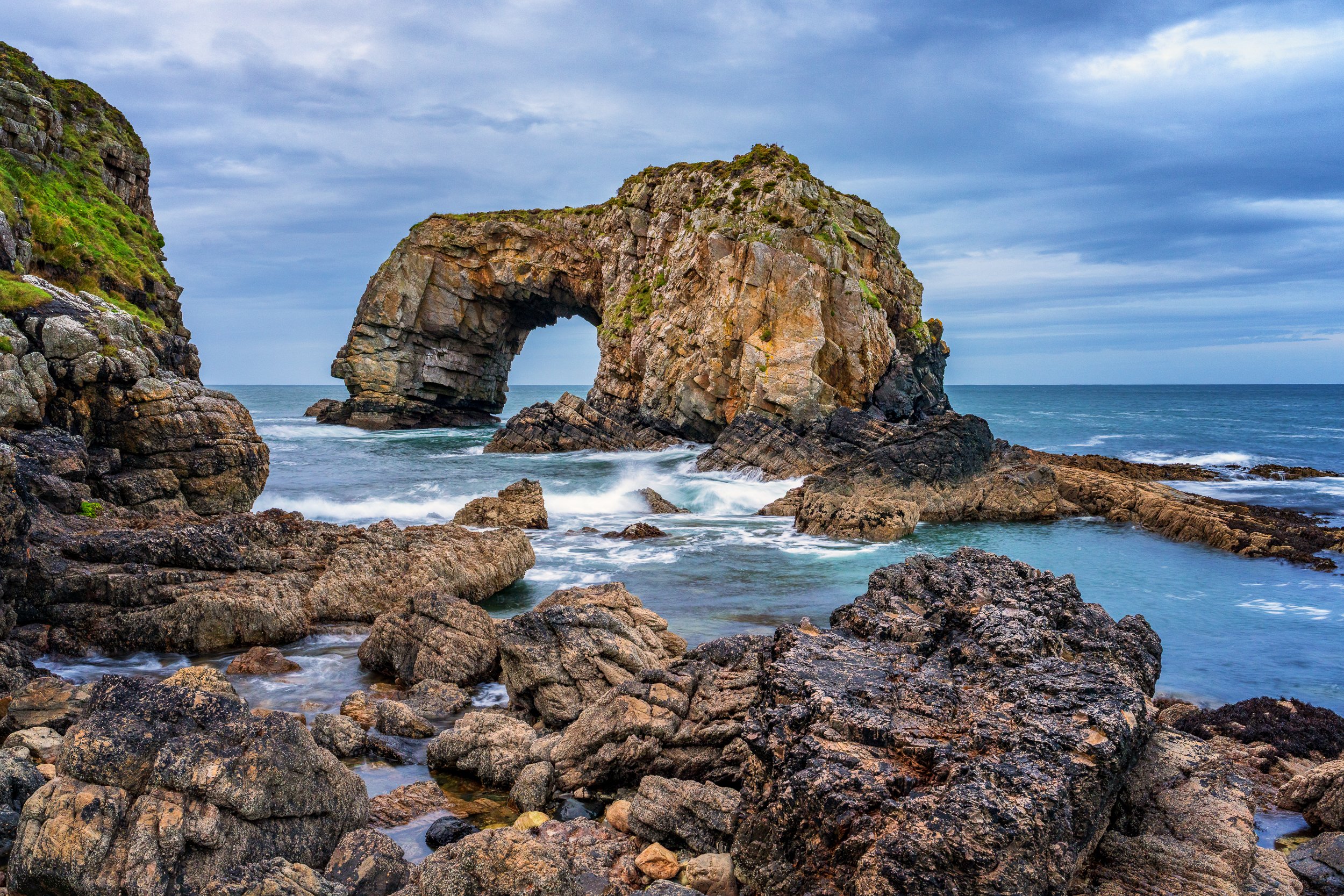
Great Pollet Sea Arch